
Drill Technical Support
The right drill setup starts with the right information. Use this page to find recommended starting speeds and feeds for SCT drills, along with practical guidance to help support hole quality, chip control, and tool life across a range of applications.
Recommended Starting Parameters
Use the speeds and feeds chart below as a starting point for programming SCT drills. Final parameters may vary based on material, machine condition, holder quality, coolant delivery, hole depth, and overall setup rigidity.
| Material | HB/Rc | Speed (SFM) Uncoated | Speed (SFM) AlTiN+ | Feed Tool Diameter 8mm | Feed Tool Diameter 10mm | Feed Tool Diameter 12mm | Feed Tool Diameter 14mm | Feed Tool Diameter 16mm | Feed Tool Diameter 18mm | Feed Tool Diameter 20mm |
|---|---|---|---|---|---|---|---|---|---|---|
| Cast Iron | 160 HB | 150-300 | 165-330 | 0.0063 | 0.0075 | 0.0100 | 0.0115 | 0.0125 | 0.0140 | 0.0150 |
| Carbon Steel | 18 Rc | 150-300 | 165-330 | 0.0048 | 0.0055 | 0.0070 | 0.0075 | 0.0079 | 0.0080 | 0.0085 |
| Alloy Steel | 20 Rc | 40-120 | 50-130 | 0.0035 | 0.0040 | 0.0050 | 0.0055 | 0.0061 | 0.0065 | 0.0068 |
| Tool Steel | 20 Rc | 40-100 | 50-130 | 0.0035 | 0.0040 | 0.0050 | 0.0055 | 0.0061 | 0.0066 | 0.0071 |
| 300 Stainless Steel | 150 HB | 80-300 | 90-330 | 0.0058 | 0.0065 | 0.0080 | 0.0088 | 0.0950 | 0.1000 | 0.1100 |
| 400 Stainless Steel | 195 HB | 40-100 | 50-110 | 0.0045 | 0.0050 | 0.0060 | 0.0065 | 0.0069 | 0.0074 | 0.0078 |
| High Temp Alloy (Ni & Co Base) | 20 Rc | 100-200 | 110-220 | 0.0038 | 0.0045 | 0.0060 | 0.0061 | 0.0061 | 0.0065 | 0.0068 |
| Titanium | 25 Rc | 80-300 | 90-330 | 0.0040 | 0.0050 | 0.0060 | 0.0065 | 0.0069 | 0.0074 | 0.0078 |
| Heat Treated Alloys (38-45Rc) | 40 Rc | 80-150 | 90-165 | 0.0030 | 0.0035 | 0.0050 | 0.0057 | 0.0064 | 0.0072 | 0.0078 |
| Aluminum | 100 HB | 250-650 | 275-725 | 0.0083 | 0.0095 | 0.0120 | 0.0135 | 0.0144 | 0.0160 | 0.0169 |
| Brass, Zinc | 80 HB | 250-450 | 275-500 | 0.0033 | 0.0035 | 0.0040 | 0.0043 | 0.0045 | 0.0048 | 0.0050 |
Note: These values are intended as starting recommendations. Adjust as needed based on application conditions and observed performance.
Setup Matters
Even the best drill will only perform as well as the setup allows. Runout, workholding, coolant application, and chip evacuation all affect hole quality and tool life. Before moving into production, confirm that the tool, holder, machine, and fixturing are aligned with the requirements of the application.
Verify toolholder and spindle condition
Minimize runout at the tool
Confirm adequate coolant access and chip evacuation
Start with recommended parameters, then adjust gradually
Validate performance on test parts before full production when possible
Application Notes by Drill Type
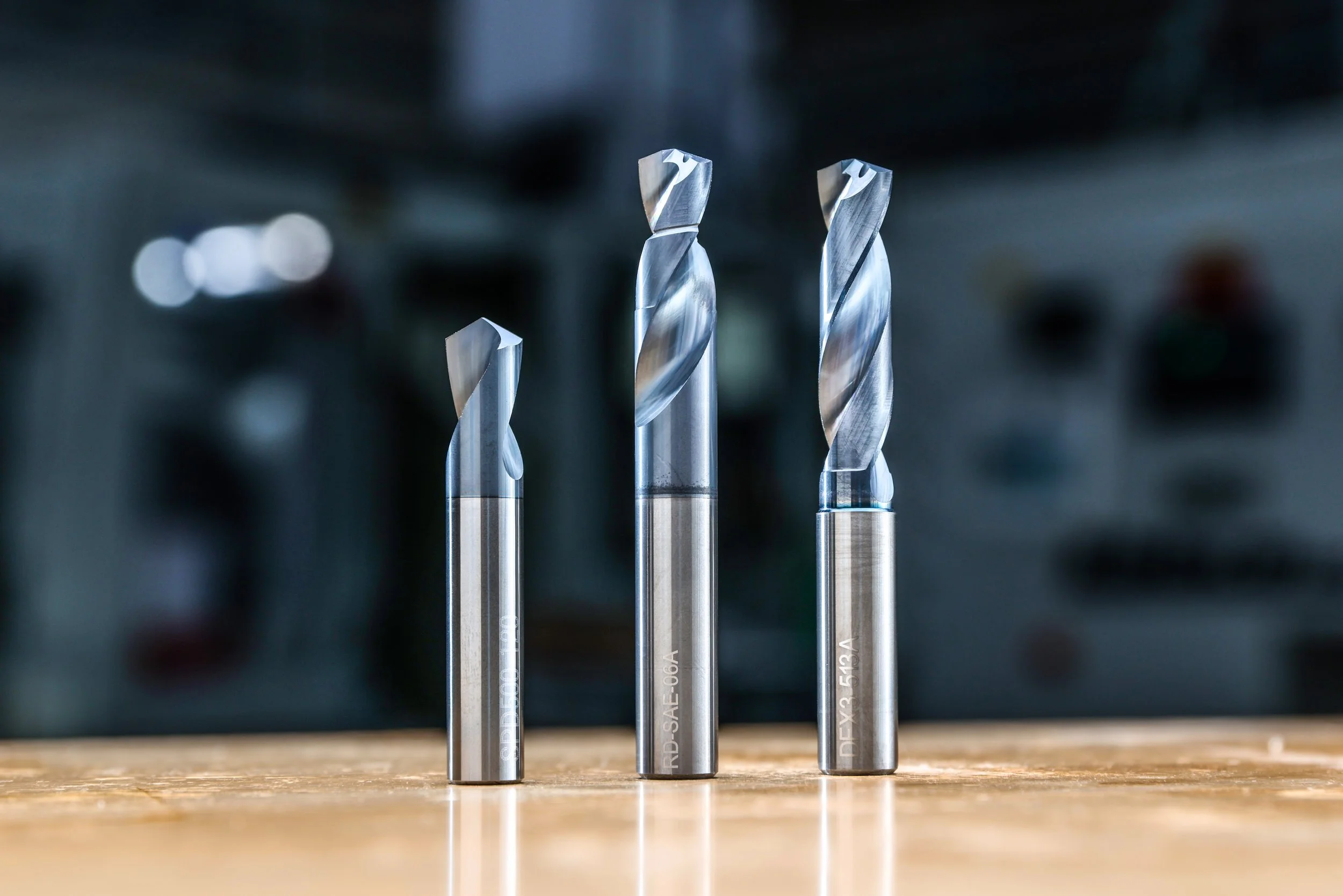
DFX Drills
DFX drills are designed to provide reliable holemaking performance across a range of materials and applications. For best results, begin with the recommended parameters and fine-tune based on material condition, hole depth, and machine stability.
Roughing Step Drills
Roughing step drills are commonly used to support downstream porting operations. Stable fixturing, proper alignment, and effective chip evacuation are especially important to help maintain consistent performance and support tool life.
Spotting Drills
Spotting drills help establish an accurate starting point for the next drilling operation. Use conservative parameters and avoid excessive depth beyond what is needed to properly spot the hole.
Need Help with an Application?
If you need help selecting the right drill, reviewing a setup, or troubleshooting performance, SCT can help. Our team can provide application guidance based on your material, machine, and hole requirements.