Why Carbide Prices Are Rising
At Scientific Cutting Tools, we work hard to keep pricing stable. When we do make an adjustment, it is because something fundamental changed upstream in the cost structure of the materials that go into your tools.
That is what is happening now.
A key upstream indicator for carbide is APT (ammonium paratungstate), an intermediate used to produce tungsten powders and, ultimately, tungsten carbide. As of April 17, 2026, European APT was reported at $2,800–$3,280 per mtu, up 230.4% year to date.
The tungsten and APT market has changed. Here’s what that means for tooling costs.
WHY THIS MATTERS
Tungsten carbide is essential to modern high-performance tooling. When the upstream cost structure changes this quickly, the impact is felt throughout the supply chain.
What is happening now is bigger than a normal commodity swing. For years, the industry largely treated tungsten carbide like a material that might move up and down, but would ultimately remain affordable and available. That assumption is what broke.
APT, or Ammonium ParaTungstate, is an intermediate material used in the production of tungsten powders and tungsten carbide. Because it sits upstream in the carbide supply chain, it is one of the clearest market indicators for rising carbide replacement cost.
WHAT IS APT?
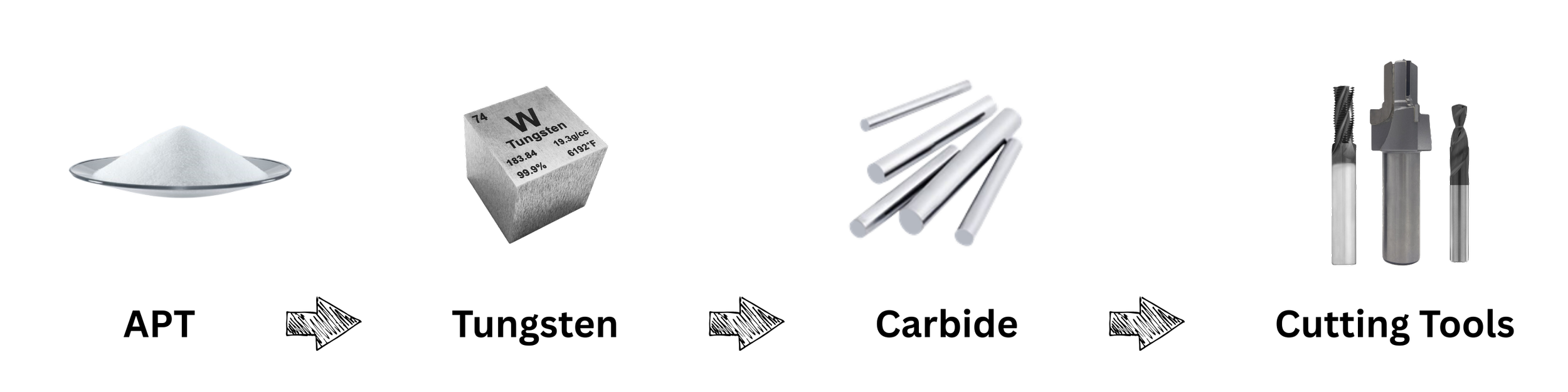
When APT moves sharply, the effects can be felt across blanks, carbide powder, and the broader economics of maintaining reliable supply.
WHAT CHANGED IN THE TUNGSTEN CARBIDE MARKET?
This is not the result of one isolated event. It is the outcome of concentrated supply, tighter controls, rising demand, and risk-driven buying all colliding at once.
Global supply is highly concentrated
China remains the dominant force in global tungsten production. USGS estimates China produced 67,000 metric tons in 2025 out of 85,000 metric tons globally.
Export controls tightened the market
China implemented new export controls on selected tungsten items in February 2025, increasing uncertainty and tightening availability outside China.
Demand remained strong
Demand from sectors like aerospace, defense, energy, and advanced manufacturing continued to put pressure on an already tight supply environment. Reuters also reported that buyers pulled material forward as protection against shortages, adding fuel to the spike.
Prices moved fast
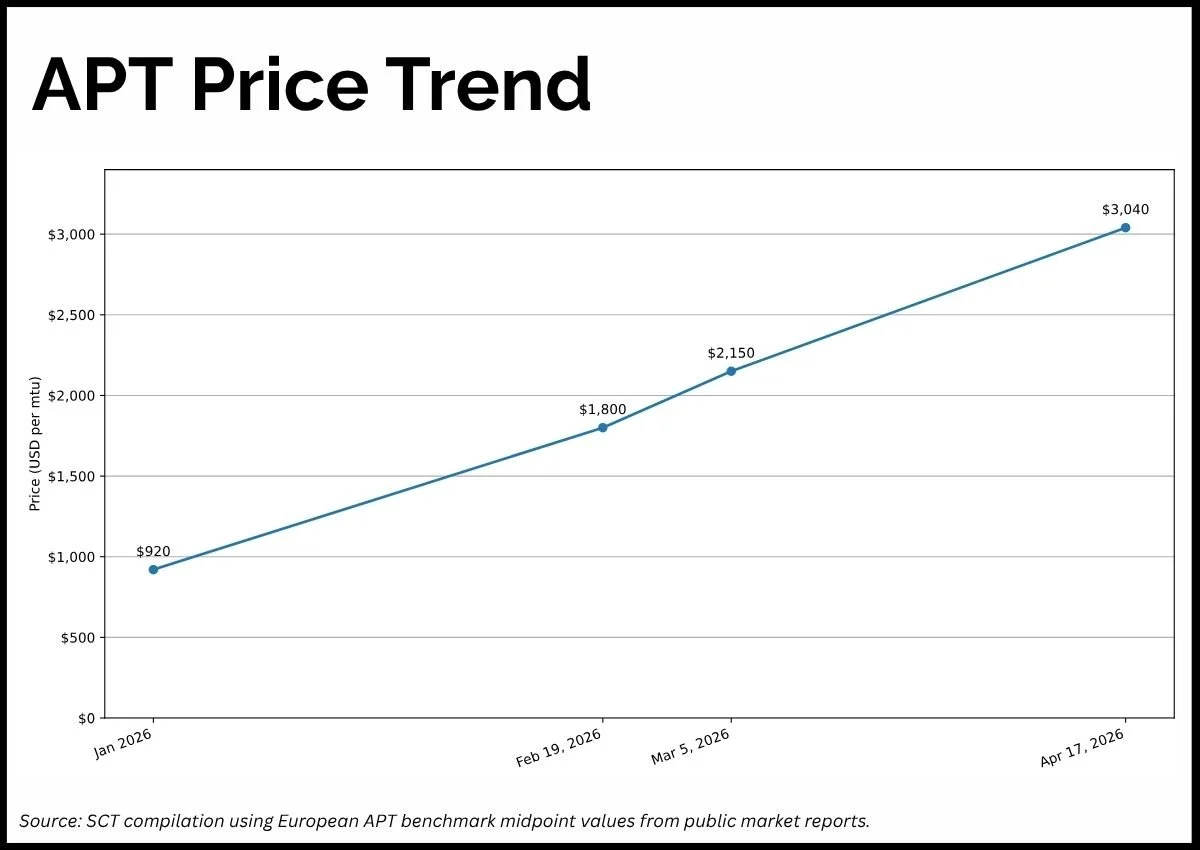
Fastmarkets reported European APT at roughly $900–$940/mtu in January 2026. By April 17, 2026, CTIA reported $2,800–$3,280/mtu.
The chart below shows how quickly European APT pricing moved from early 2026 into mid-April.
WHAT THIS MEANS FOR OUR CUSTOMERS
The market is showing two things at once. Some domestic Chinese prices have eased from peak levels, but the international market remains elevated because supply outside China is still tight. That means this is not a simple spike-and-reversal story. It is a market trying to find a new floor at a much higher level than manufacturers were used to.
For tool buyers, that changes the calculus on pricing, inventory planning, and replacement cost. The bigger lesson is not simply that prices rose. It is that a supply structure optimized for low cost and efficiency proved far less resilient when conditions changed.
HOW SCT IS RESPONDING
At SCT, we do not revise pricing casually. We work hard to absorb what we can where timing allows. But when upstream replacement cost resets this quickly, measured pricing adjustments become necessary to protect supply continuity, maintain product quality, and continue serving customers responsibly.
We also believe transparency matters. That is why we are sharing the upstream market context directly, rather than reducing this to a single headline about pricing.
MANAGING CARBIDE STRATEGICALLY
Tungsten carbide remains essential to modern machining. That is not changing. What has changed is the assumption that it will always behave like a stable, predictable commodity.
In this kind of market, companies are better served by thinking strategically:
Optimize tool performance and tool life
Reduce avoidable process variation
Strengthen recycling and scrap recovery programs
Build resilient supply relationships
Stay informed and price with clarity
WATCH THE FULL EXPLANATION
For additional context, we have also shared a video that explains these market conditions in more detail. It quickly drew strong interest across the industry, and we hope it provides helpful context for your team as well.
QUESTIONS ABOUT PRICING OR SUPPLY?
If you have questions about current pricing, lead times, or how these market conditions may affect your tooling strategy, our team is here to help.